This jewel produced by Nikon in 1985 is, without doubt, one of the most beautiful and complete cameras Nikon made over the (long) years since they started to develop and build film cameras. It’s true, it doesn’t have the classic look of the Nikon F or F2, nor the clean, “giugiaro” visual feeling of the Nikon F3. But it is one of the jewels in their crown, I would say; certainly one of their best products so far. Of course, I am talking here about film cameras only.
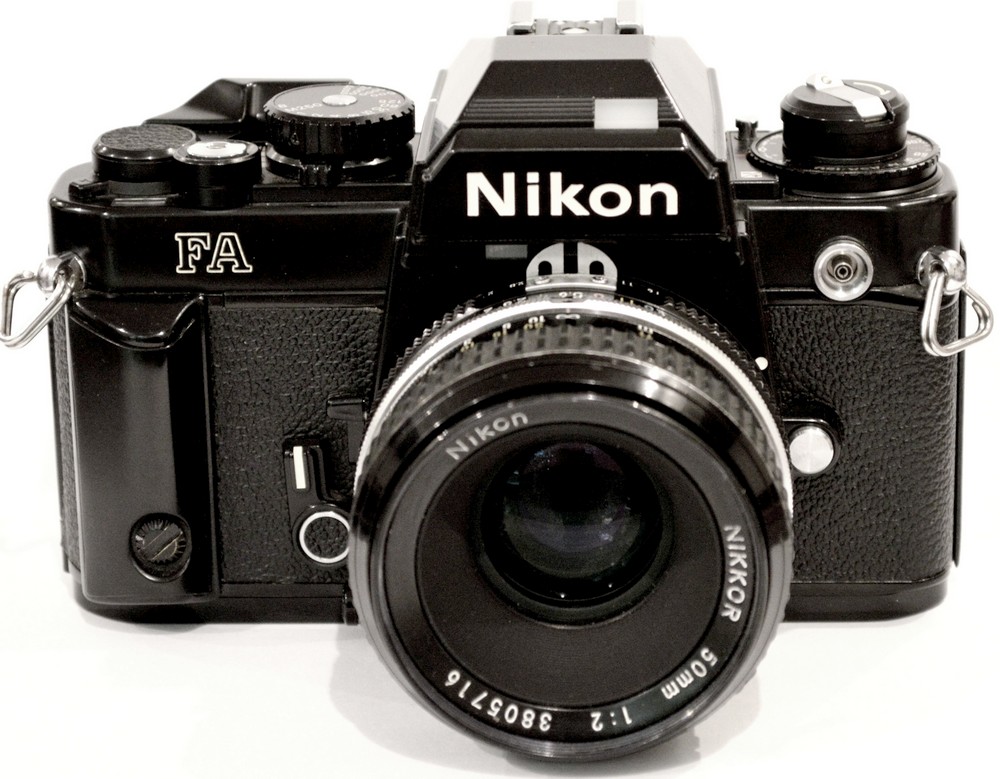
The first thing you’ll notice is the size: less than Nikon F2 or Nikon F3, for instance, almost the size of my Olympus OM2n. That, and the 1/4000 second shutter speed. I mean, I have this speed on my Nikon FM3a and of course, 1/8000 on the Nikon F4, but having this on another Nikon it’s just great. I do not shoot much at this speed, but it’s nice to have it handy if need be. It is small, but make no mistake, it is feeling just right in the hand, and is quite hefty for its size. Also, the smaller size of the FA makes it a perfect candidate to pair it up with a 50/1.8 pancake. Perfect, right?
Another thing which comes immediately to your attention is the modes this camera employs: PSAM (program, shutter priority, aperture priority, manual). I am being royally treated here, because apart from the ever-manual in my F and F2, I being given the chance to shoot in either of the 4 modes, and this I could do only with the Nikon F4. Not even Nikon FM3a has this, and it is considered to be the legacy camera for Nikon.
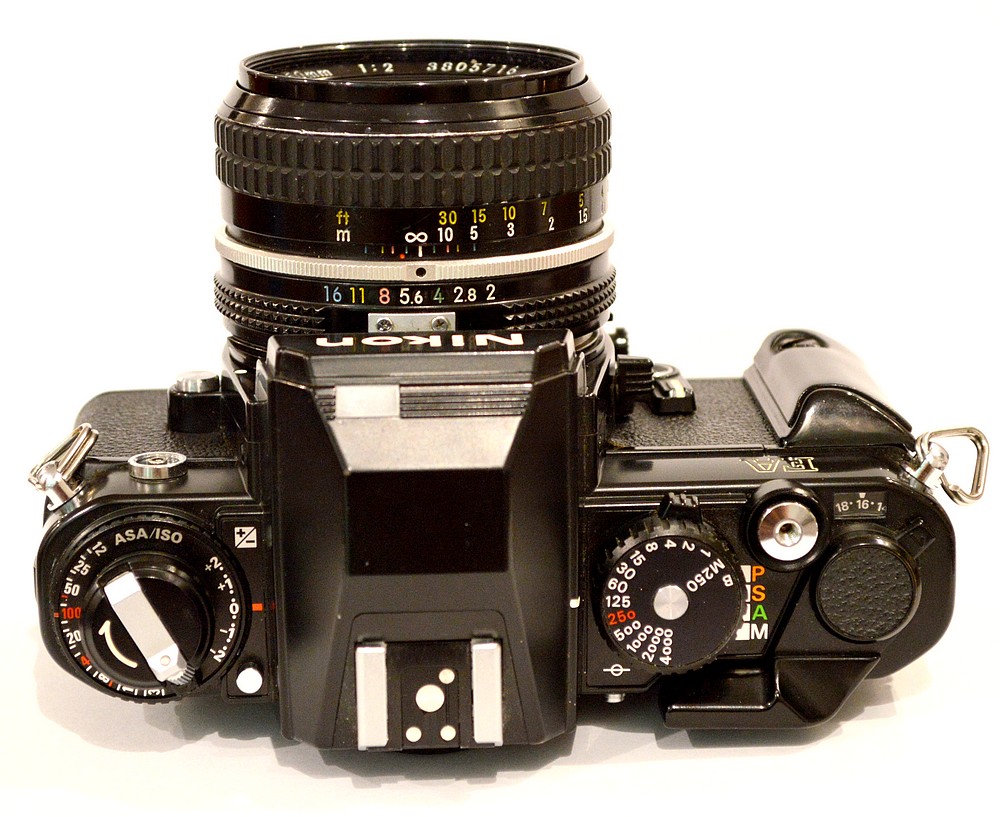
The grip is a factory-one, and a nice add to the camera’s functionality; much better handling and more secure. To sum up, my FM3a doesn’t have it, my Nikon F3 has it (sort of), and the F4 has that beast of a grip.
A much more easy way to change the ISO, easier than on the F3; just lift the thing and rotate. Clear, easy. Regarding the shutter speed button itself, very generous, including the M250 position where it fires at that speed only if you are out of battery. Also this is the speed at which your camera will shoot for the first frames, until you reach number 1 frame. After that, it’s business as usual.
You’ll notice also that the prism does not come off. No waist finder, therefore. But you have a nice and useful viewfinder red leaf, to block the light when doing long exposures. Releasing the latch to open the backdoor is the same as with the F3: there’s a switch you’ll have to push to the right, on the rewind knob.
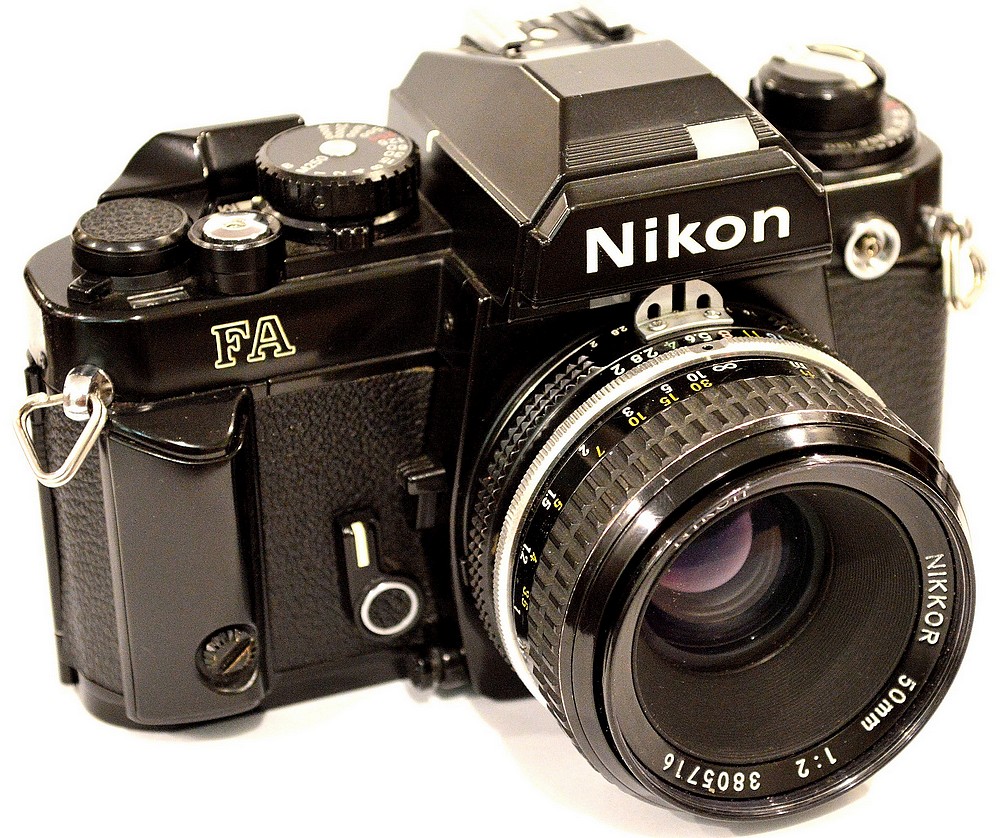
Did I mentioned anything about the winder and release actions? These are eee-xcelent, and to be honest I only have this opinion when I shot the F3 for the first time. That ball bearing winder mechanism, on the F3, is something so silky…Well, this one on the FA is almost similar. The release is deep and satisfying, and a but quieter than the other Nikon cameras I own and use.

I left the best for last: the matrix system of the Nikon FA. We take for grated this system nowadays, but back in the day this was akin to finding water on Mars. If you wish to learn more about this system, look here:
“Virtually all cameras has a metering system to give you a guide what should be a theoretical ‘correct’ exposure. These data are measured by a light sentitive metering cell(s) that incorporated in the camera body. A neutral reference point is a metered value reflected from a 18% grey card. Anything above is termed as over and data measured below is considered as under exposed. Well, this is the older way of average metering – it measures the across the whole picture frame and return with a suggested data. Since most pictures have their subject of interest around the center of the picture frame, the center portion was give some priority – that is how Nikon’s termed their metering system as ‘Center Weighted Average Metering System’. That method was used since the Nikon F Photomic TN and he Nikkormat FTn in 1967. The Nikon’s viewfinder has a unique 12mm circle, which gives you the outline of where the priority of measurement given in a 60/40 composition. (Priority of 60% was given within the 12mm circle and the rest was given 40% average measurement). But the Nikon FA changed the combination to even more precise 75/25 instead of the 60/40 (Nikon F3’s metering was the first to change in 80/20 combination).
The Nikon FA has two options: the conventional center-weighted or a ‘new’ matrix metering – in the early days of FA, Nikon termed that as ‘Multi-Segment Metering System’. When Nikon introduced the FA they introduced to the world of this revolutionized matrix metering. Both of these metering systems employ TTL (Through the lens) full-aperture exposure metering. This means that light passing through the lens is measured at full aperture therefore the viewfinder image is at its brightest until the moment of exposure.” – www.mir.com
Is this a camera that I am using always? Er, no, that title goes to my Nikon F2 and F3. But the FA is a wonder for me, as it seems whatever I do, the film always comes out well exposed. Much better than with the other Nikon cameras? Perhaps not, but the FA is doing this without any fuss or difficulty for me. So yeah, it’s a keep this one.